Health & Food
Medicine Nobel honours pioneers who used light to study the brain
Karl Deisseroth, Peter Hegemann and Georg Nagel won the medicine Nobel for discoveries that made it possible to control nerve-cell activity with light. Optogenetics has transformed brain research, while medical applications remain an active area of investigation.
From 6 October 2026 — Daily Brief
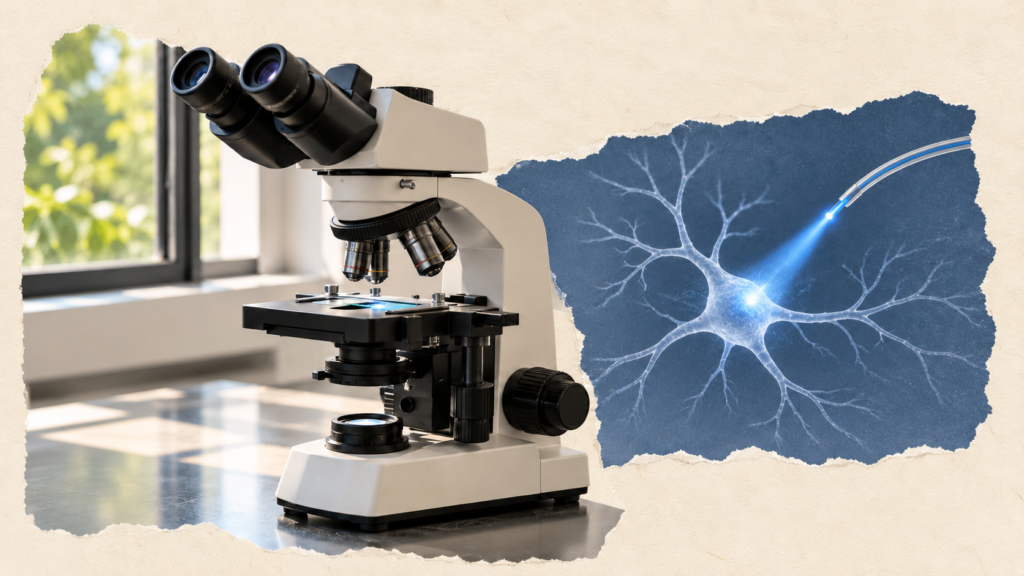
Karl Deisseroth, Peter Hegemann and Georg Nagel have won the 2026 Nobel Prize in Physiology or Medicine for discoveries behind optogenetics, a method that uses light to control the activity of nerve cells.
The Nobel Assembly at Karolinska Institutet announced the award on 5 October. Their work has given researchers a way to investigate how particular brain circuits contribute to memories, feelings and behaviour.
Hegemann and Nagel studied how a single-celled alga responds to light. They identified channelrhodopsin, a protein that opens a channel when illuminated, allowing charged particles to pass through and generate an electrical response.
Deisseroth introduced the relevant gene into rat nerve cells and showed that light could trigger a nerve signal. His work helped turn the discovery into a tool for investigating the living brain.
The technique allows scientists to test the contribution of specific nerve cells, rather than simply observe activity occurring alongside a behaviour. It is now used in laboratories around the world.
Researchers are also investigating medical applications, including attempts to restore sight in people with visual impairment. These efforts should be distinguished from established treatments for every neurological condition.
The medicine announcement opens the annual Nobel awards week. Physics, chemistry, literature, peace and economics announcements follow over the coming days.